Archaic Athens (700-480 BC)
The archaic era for Athens was a period of political and social upheaval but also of great prosperity in art and trade. Three important events took place at this time: the tyranny of Peisistratus, the rise of the Democracy and the Persian Wars.
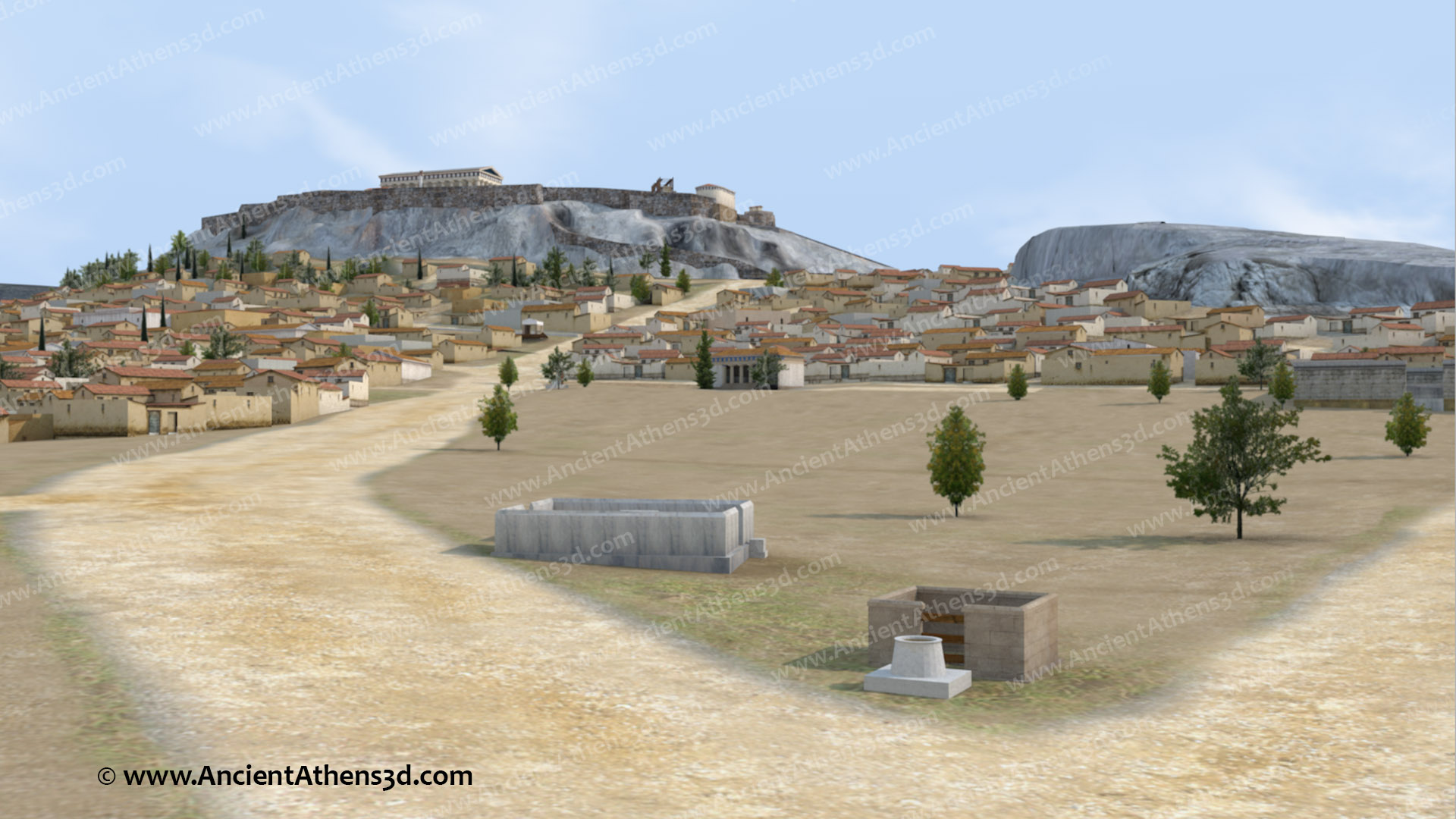
Solon or Peisistratus fortified Athens with a circuit wall for the first time in the 6th century BC, with an almost circular wall. The Mycenaean fortification of the Acropolis with the cyclopean wall remained in use. Many monuments were built on the Acropolis and the Agora, and for the first time the city was supplied with water by the Aqueduct of Peisistratus, which brought water to the city from mount Hymettus. Peisistratus and his sons, in an effort to give Athens the grandeur of the Ionian cities of Asia Minor, began the construction of the giant temple of Olympian Zeus (Olympieion) which remained unfinished and was finally completed by the emperor Hadrian at 130 AD.
The sons of Peisistratus, Hippias and Hipparchus ruled Athens after the death of their father. In 514 BC. Hipparchus was assassinated in the Agora of Athens by the "Tyrannocides" Armodios and Aristogeiton. After the fall of tyranny, a new era dawned for Athens. In 504 BC Cleisthenes introduced a new form of government, Democracy. This new system demanded the construction of new, this time public, buildings in the area of the Agora.
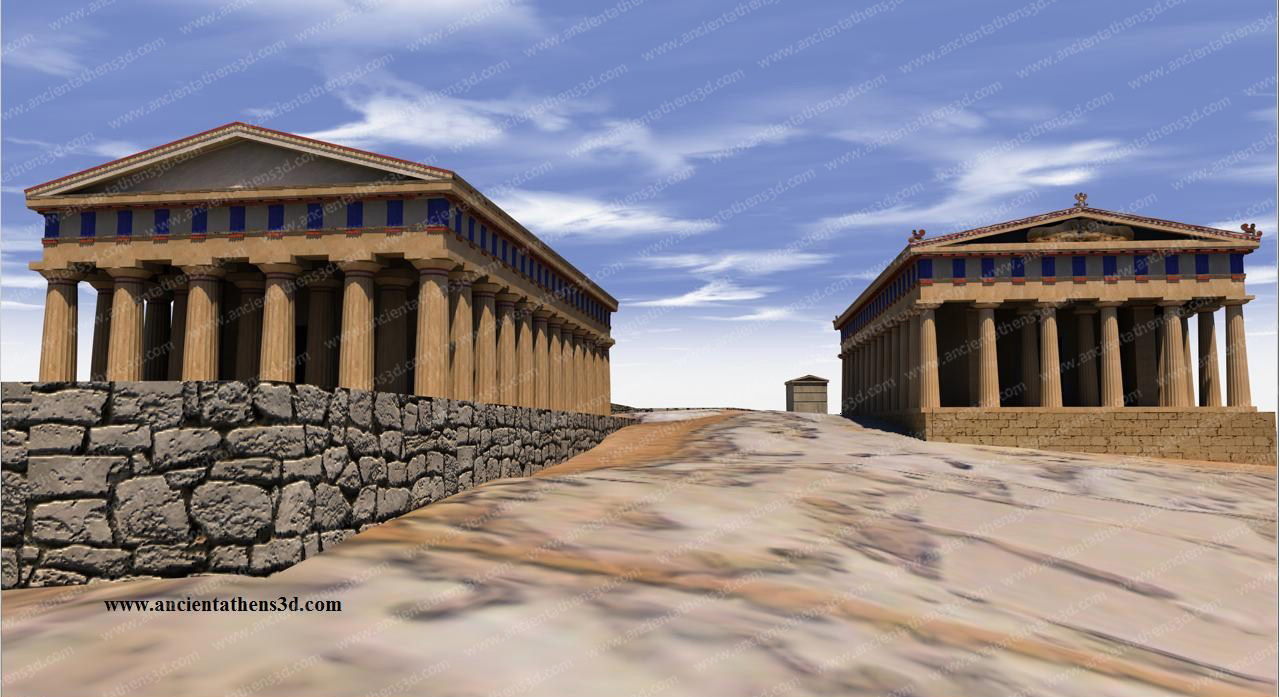
A new construction program began on the Acropolis, mainly after the battle of Marathon. In the second period of the Persian wars, in 480 BC, seeing the Persians approaching, the Athenians with their fleet left the city and settled temporarily in Salamis. In September, the Persians entered Athens and destroyed all the sanctuaries and the Acropolis. In the summer of the following year, the Persians completely destroyed the city, having invaded for the second time. After the final victory of the Greeks and the retreat of the Persians, the Athenians returned. Despite the oath they had taken with the rest of the Greeks not to rebuild the sanctuaries destroyed by the Persians and to leave the ruins to remember the sufferings of the war, the building program continued. The ruins of the archaic temple of Athena Polias on the Acropolis were preserved and the construction of a new temple of Athena, the Parthenon, a little further south began. Architectural members of the destroyed temples were used a little later, on the north wall, so as to be visible from the Agora to remind the war. At the same spot can be seen today.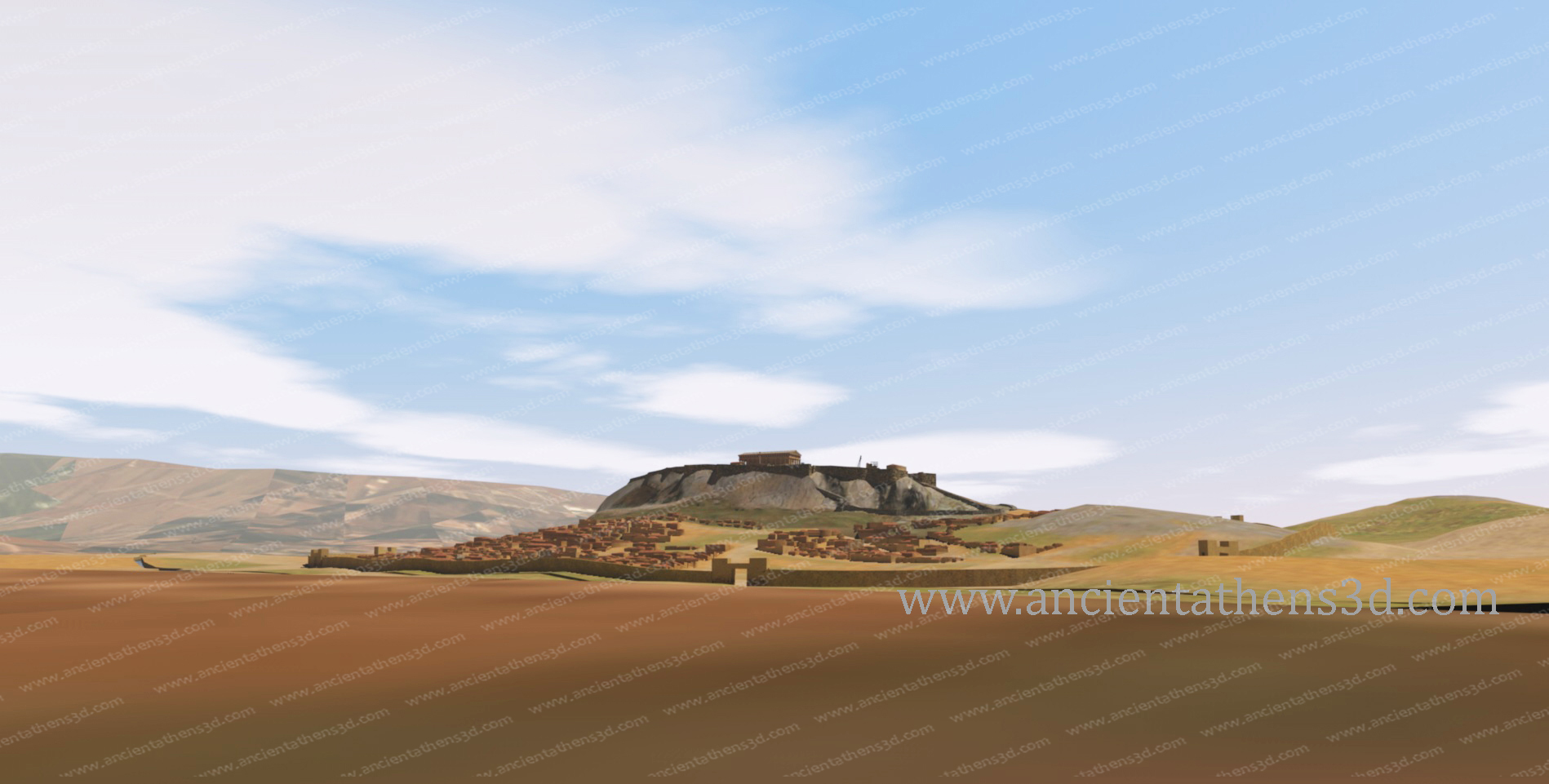
Panoramic view of Athens from the west, where the municipality of Peristeri stands today.
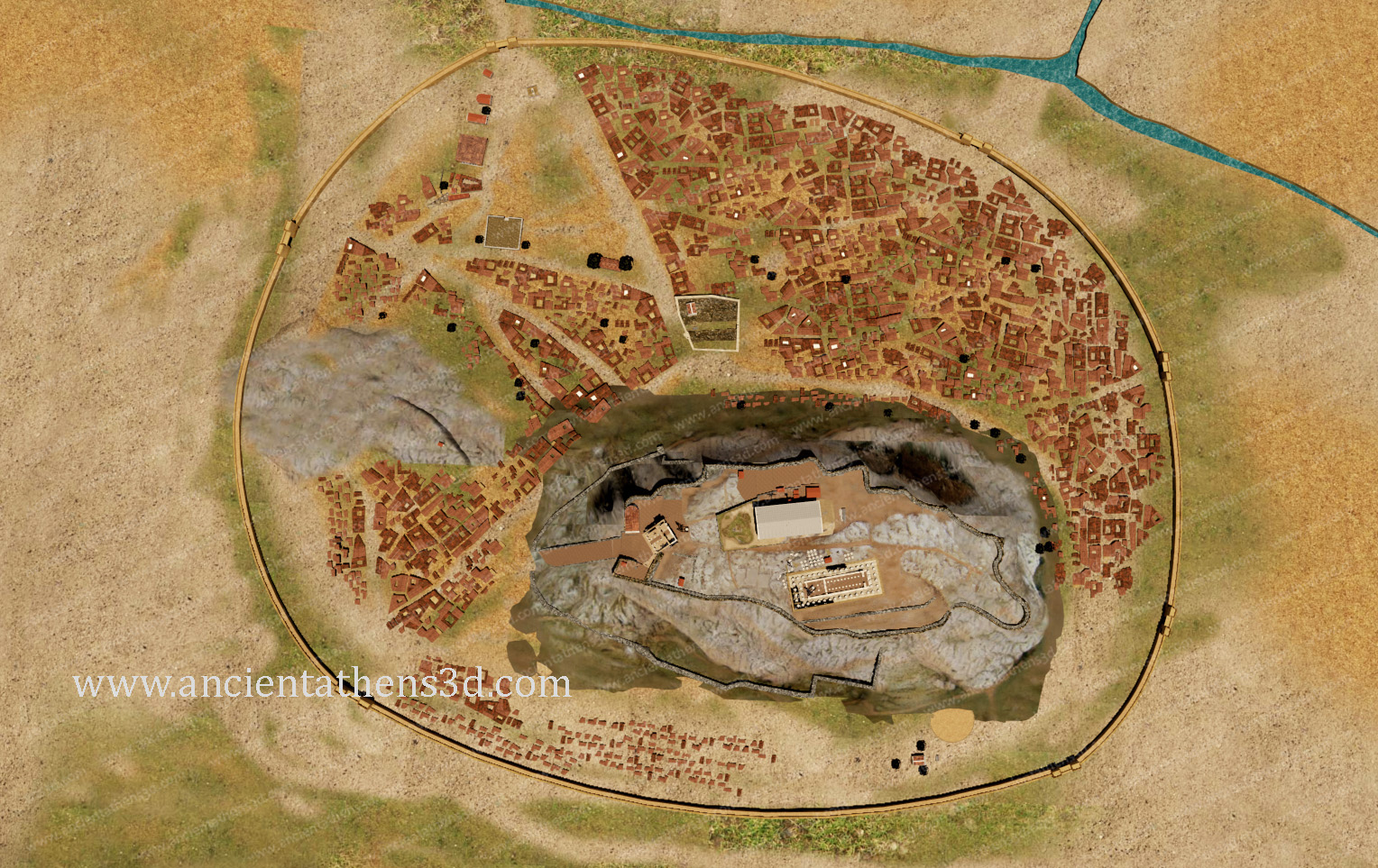
Aerial view of archaic Athens surrounded with the wall of Peisistratos. On the top left is the Agora. South of the Acropolis, the green circle is the sanctuary of Dionyssos, what will eventually evolve to the first theatre.
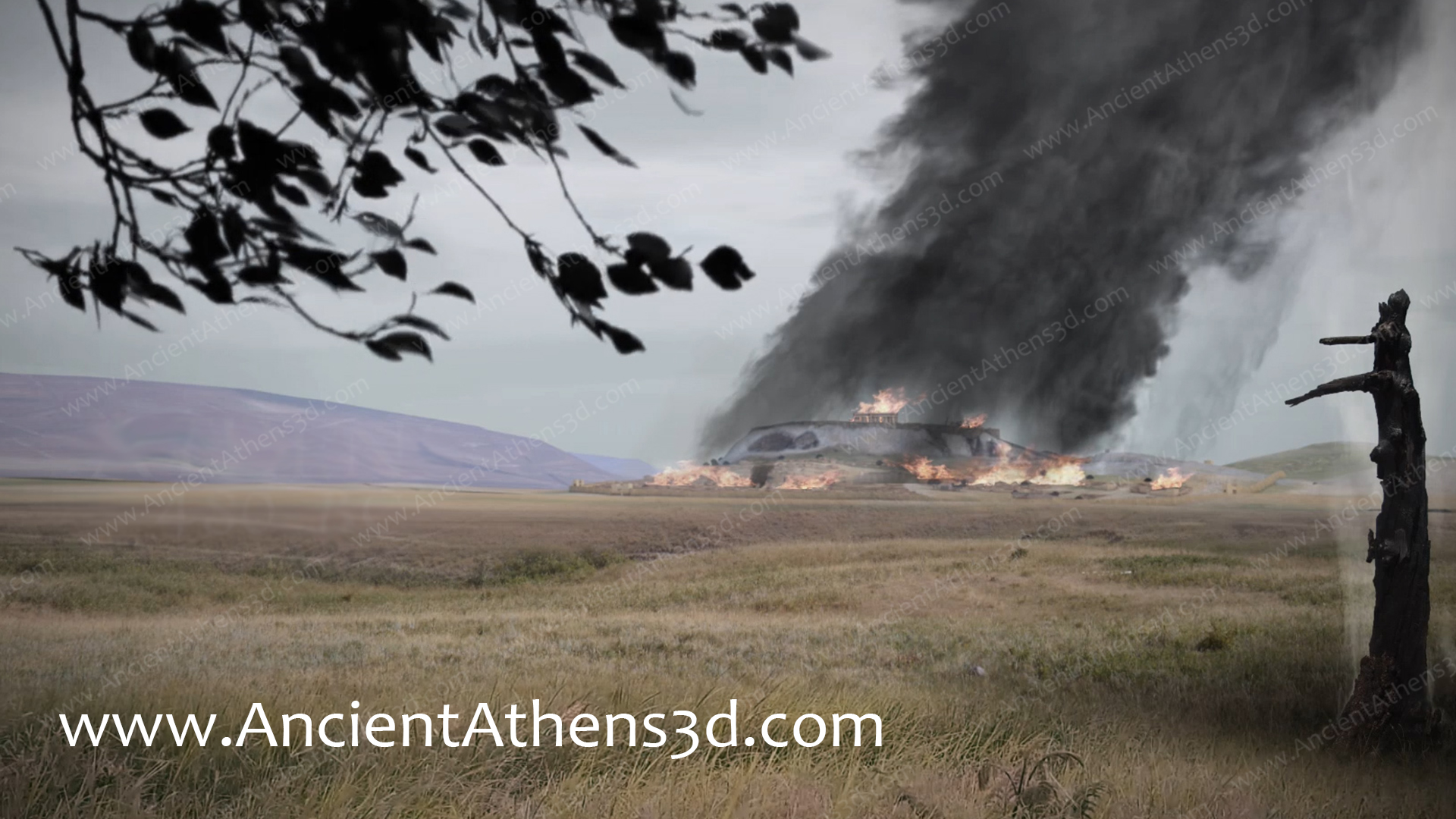
Athens on fire after the Persian sack. View from the area of Kolonos.