
Ottoman Athens 1458-1833
In 1456 the Ottomans reached Athens and occupied the city peacefully with the capitulation of Duke Acciaiuoli in 1458. Sultan Mehmed II, reached the city in August of that year and admired the ancient citadel of Acropolis. Contrary to the westerners, the Ottomans showed respect to the city. They did not plunder the monuments, neither they harmed them. Only a few changes took place in the Parthenon with the addition of a minaret, for its transformation into a mosque, and in the Erechtheion which was used to accommodate the harem.
1st period (1458-1640)
The surface of the Acropolis was covered by many houses, where the ottoman families, the garrison and the commander resided. Due to its importance as a military fortress, the entrance to the Acropolis was denied to all christians unless they had a special license. The Parthenon as a mosque aroused the admiration of visitors as except for minor modifications needed for muslim worship, it still stood in a fairly good condition.
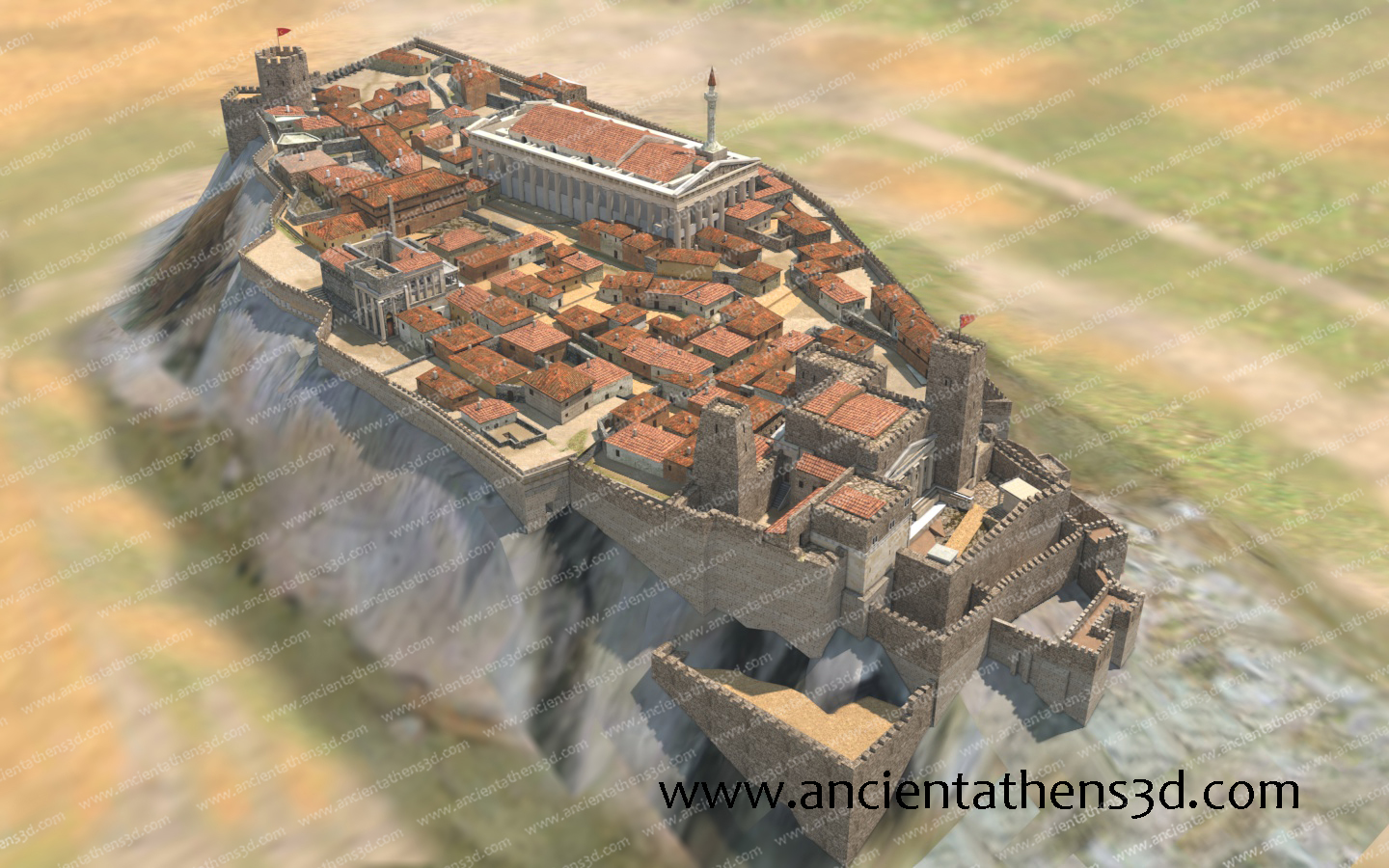
General view of the Acropolis during the first years of Ottoman occupation. The Parthenon is converted into a mosque and the whole surface is covered by houses.
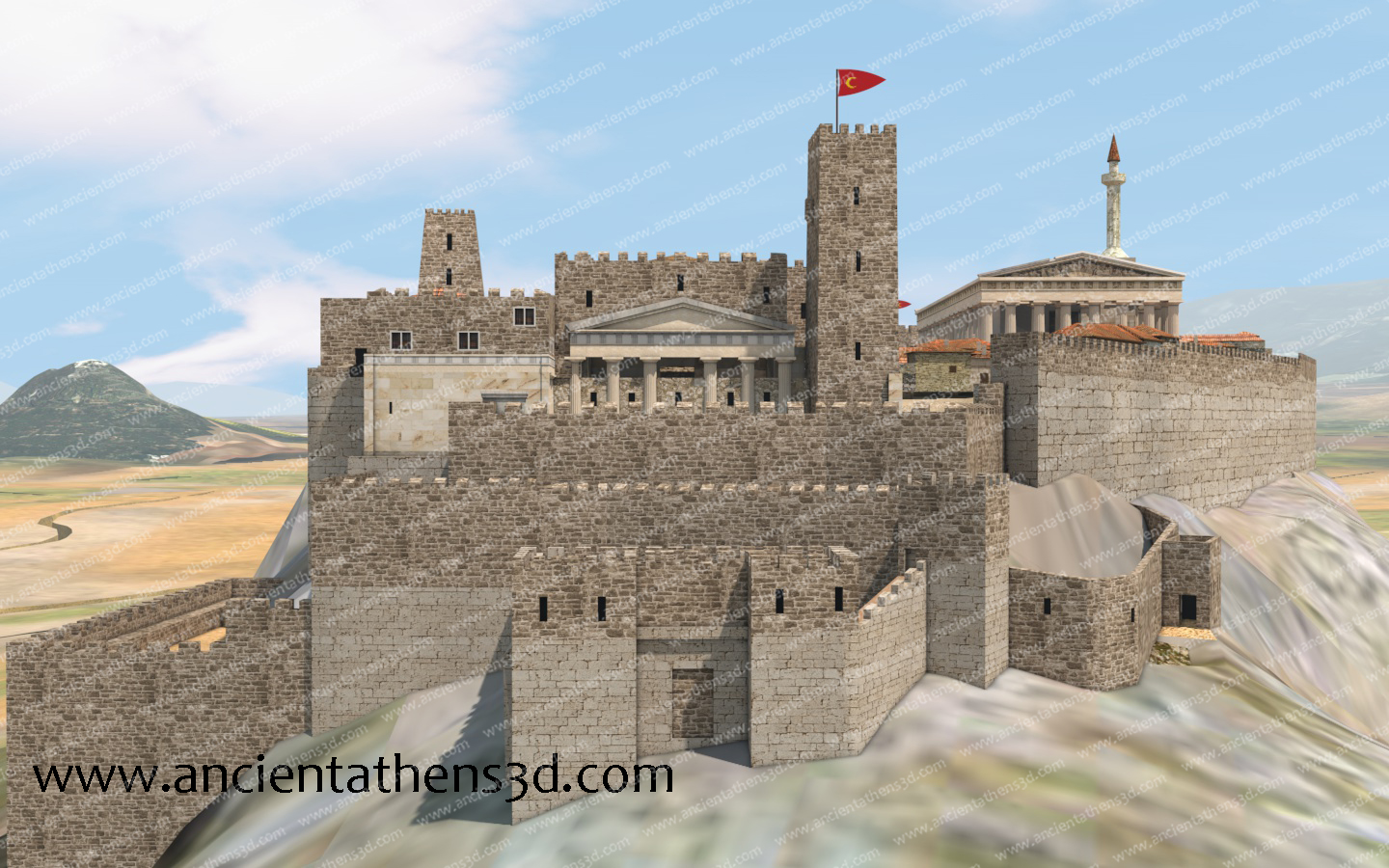
View from the west.
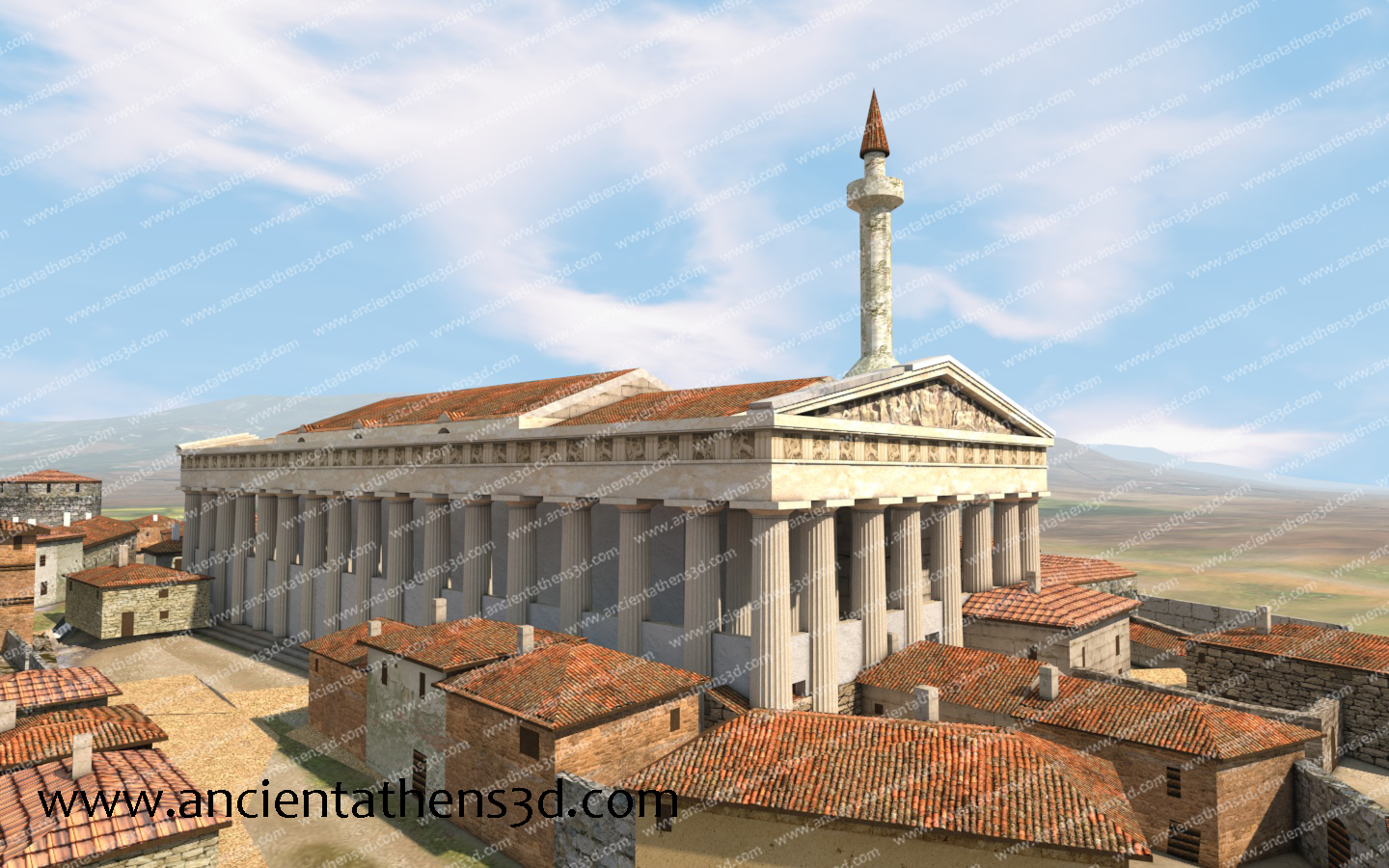
The Parthenon after the conversion into a mosque with the minaret in the southwest corner.
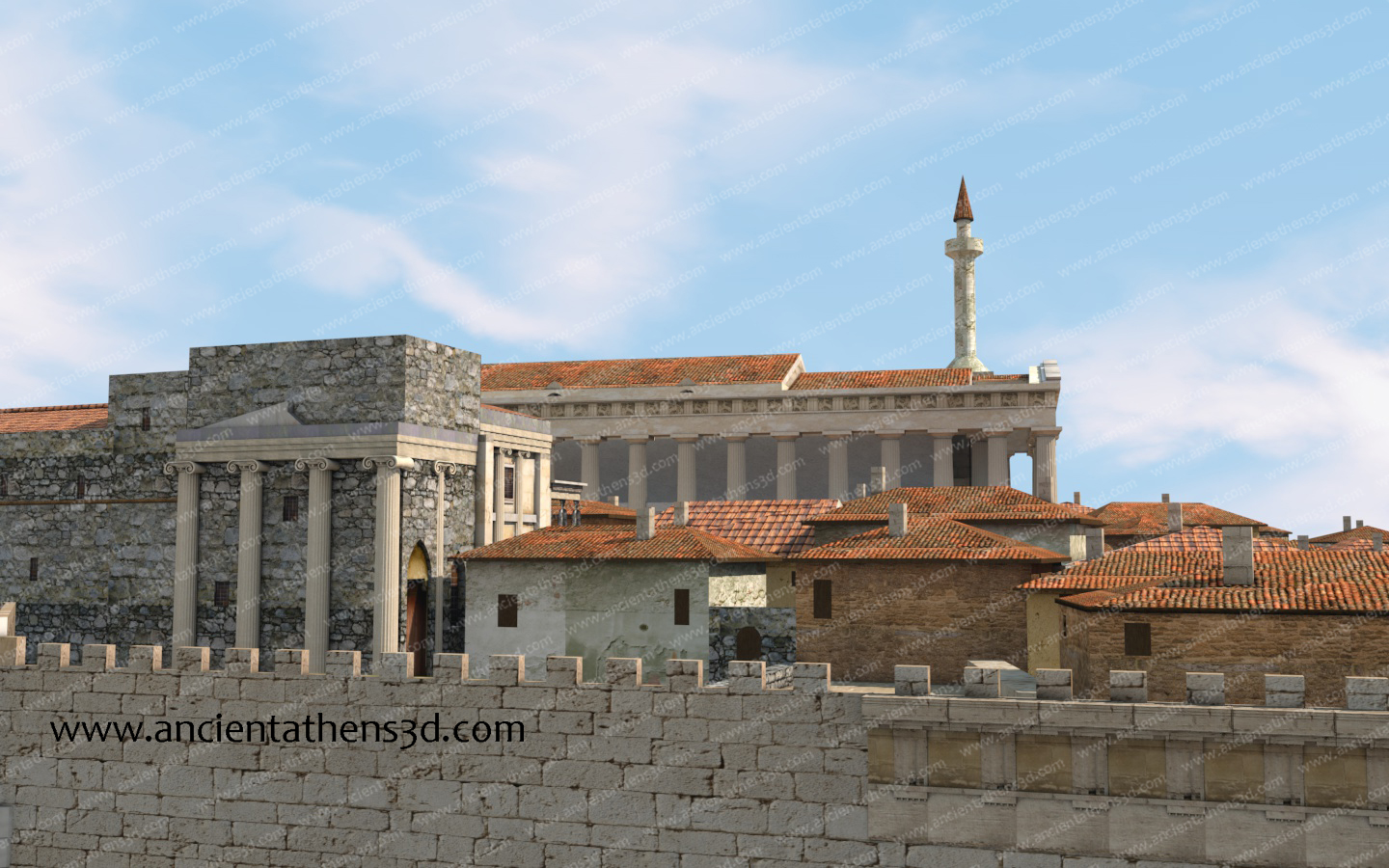
Part of the Acropolis from the north. On the left is the Erechtheum and in the background the Parthenon as a mosque.
2nd period (1640-1833)
The monuments of the Acropolis, and mainly the Parthenon, used to stand almost intact since the antiquity. In the 17th century, however, two destructions took place. In 1640 a lightning caused an explosion in the Propylaea where gunpowder was stored. Parthenon became the next gunpowder magazine. During the siege by the Venetians, under the command of the future Doge Francesco Morosini, a canon shell fell in the Parthenon and caused a huge explosion (night of September 26, 1687). The Turks immediately afterwards, built a smaller mosque between the ruins of the Parthenon, which was demolished in 1844 along with all of the houses. The big medieval tower in the Propylaea was also demolished in 1875.
Between 1801 and 1812, Thomas Bruce, 7th Earl of Elgin removed more than half of the sculptures of the Parthenon, parts of the Erechtheion (including a caryatid), along with many other antiquities, causing major damage to the monuments, and took them to England. The removal of the sculptures immediately caused great dispute which continues today. Elgin sold his collection to the British Museum in London in 1816, where it still remains. During the Greek War of Independence, the city of Athens was occupied by the Greek forces for the first time on April 25, 1821 and the Turks of the Acropolis surrendered on June 9, 1822, after many skirmishes. During that siege, the Turks on the Acropolis dismantled large parts of the remaining Parthenon walls to remove the lead clamps which held the blocks together, in order to produce ammunition. In 1826-1827 the city was extensively destroyed during the siege and bombing by the Turkish General Kutahi Pasha, who managed to recapture it. Athens was officially liberated on March 31, 1833, with the departure of the Turkish guard from the Acropolis. Rebuilding plans begun immediately and on September 18, 1834, Athens was declared the capital of Greece.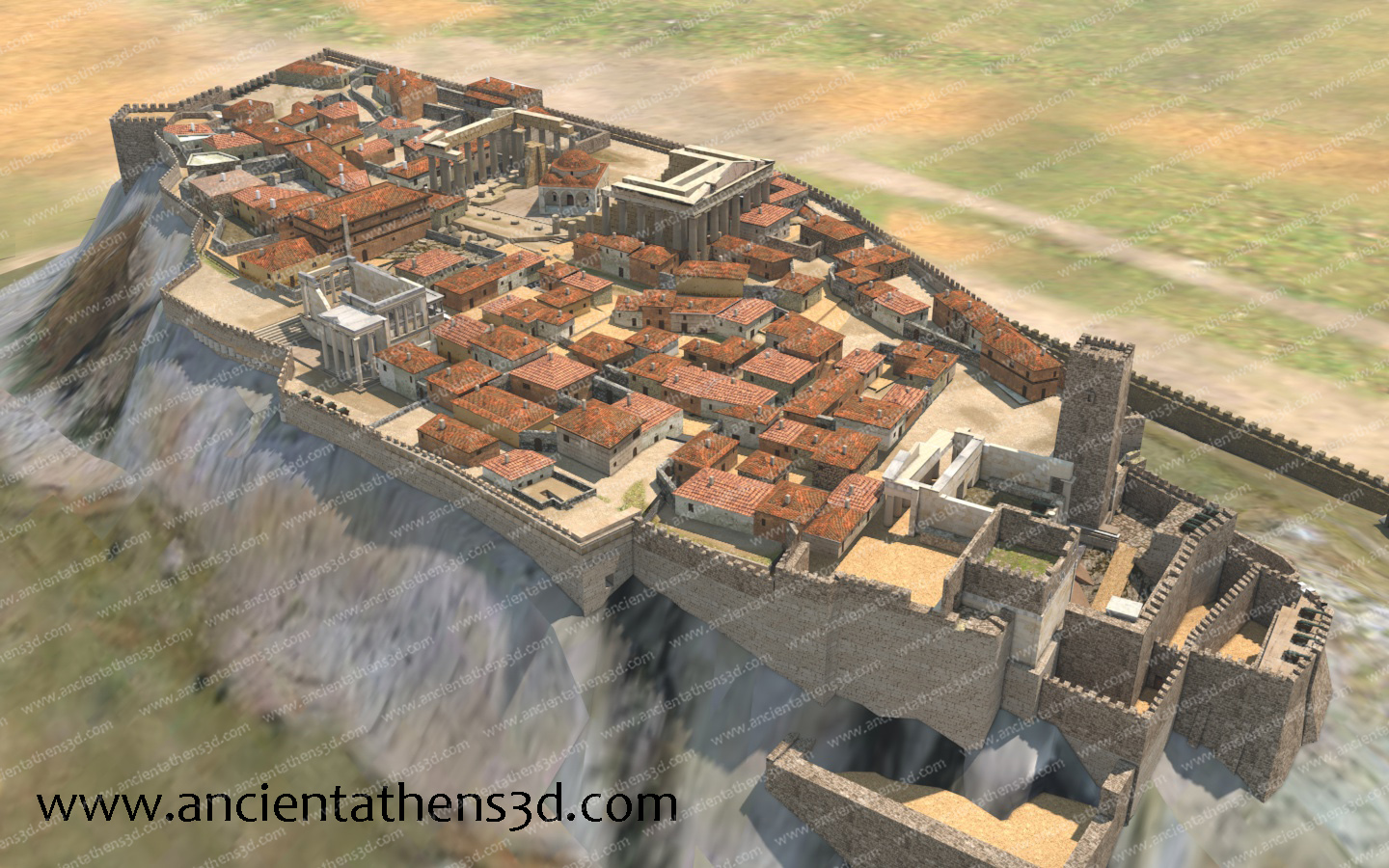
View of the Acropolis after 1687. The Propylaea and the Parthenon have suffered severe damages from the explosions.
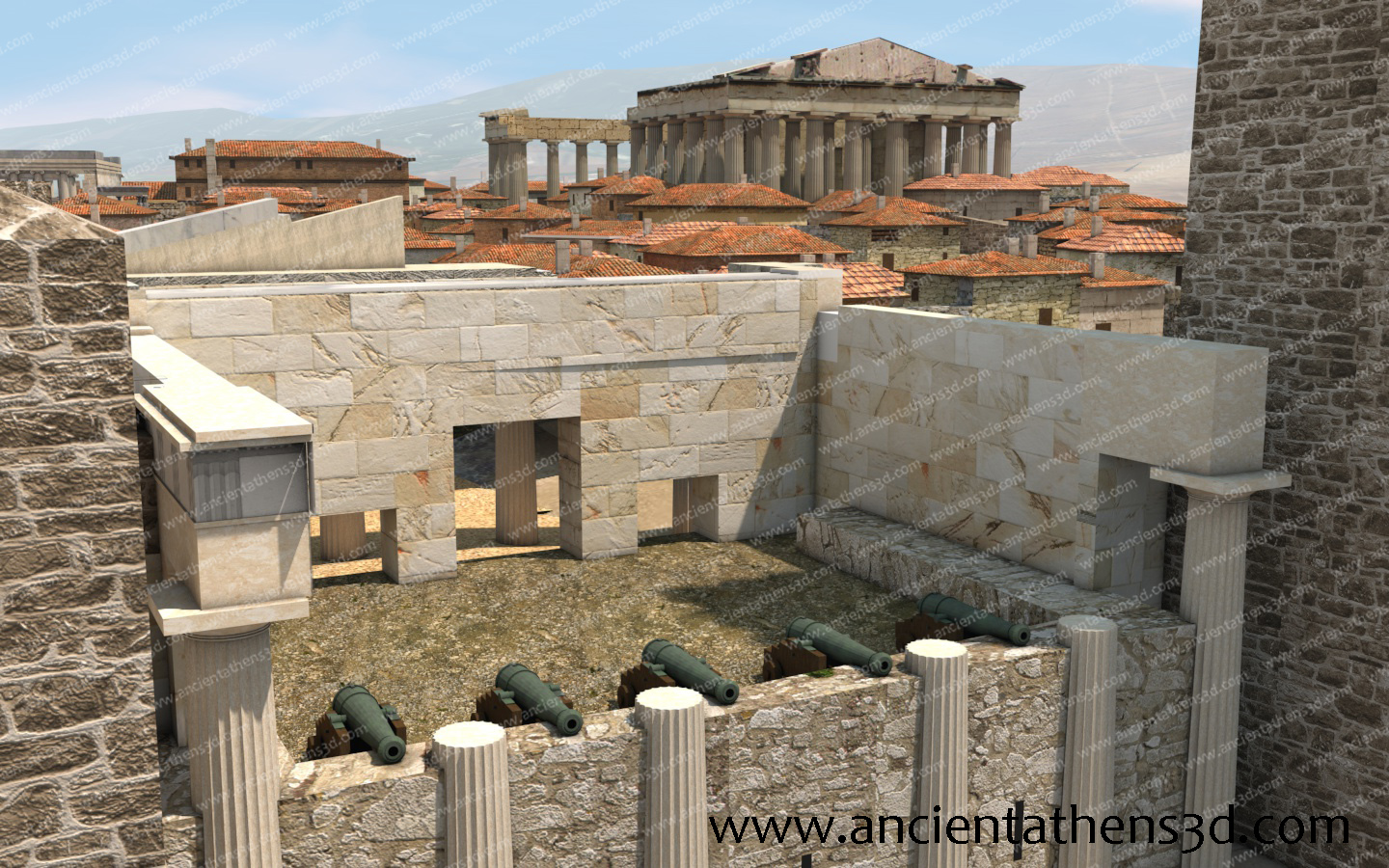
The destroyed Propylaea were used as a cannon battlement.
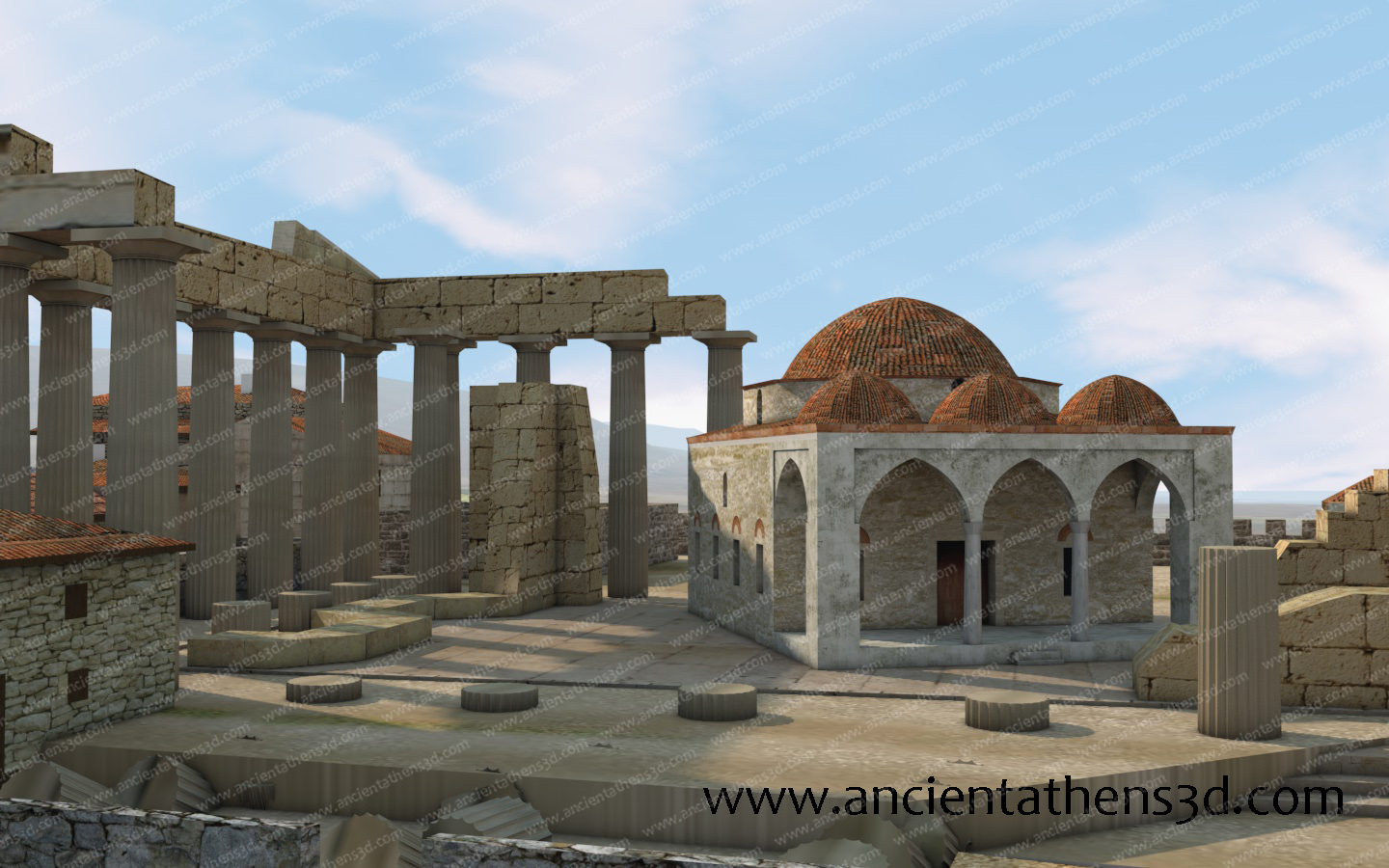
The small mosque inside the Parthenon's ruins.
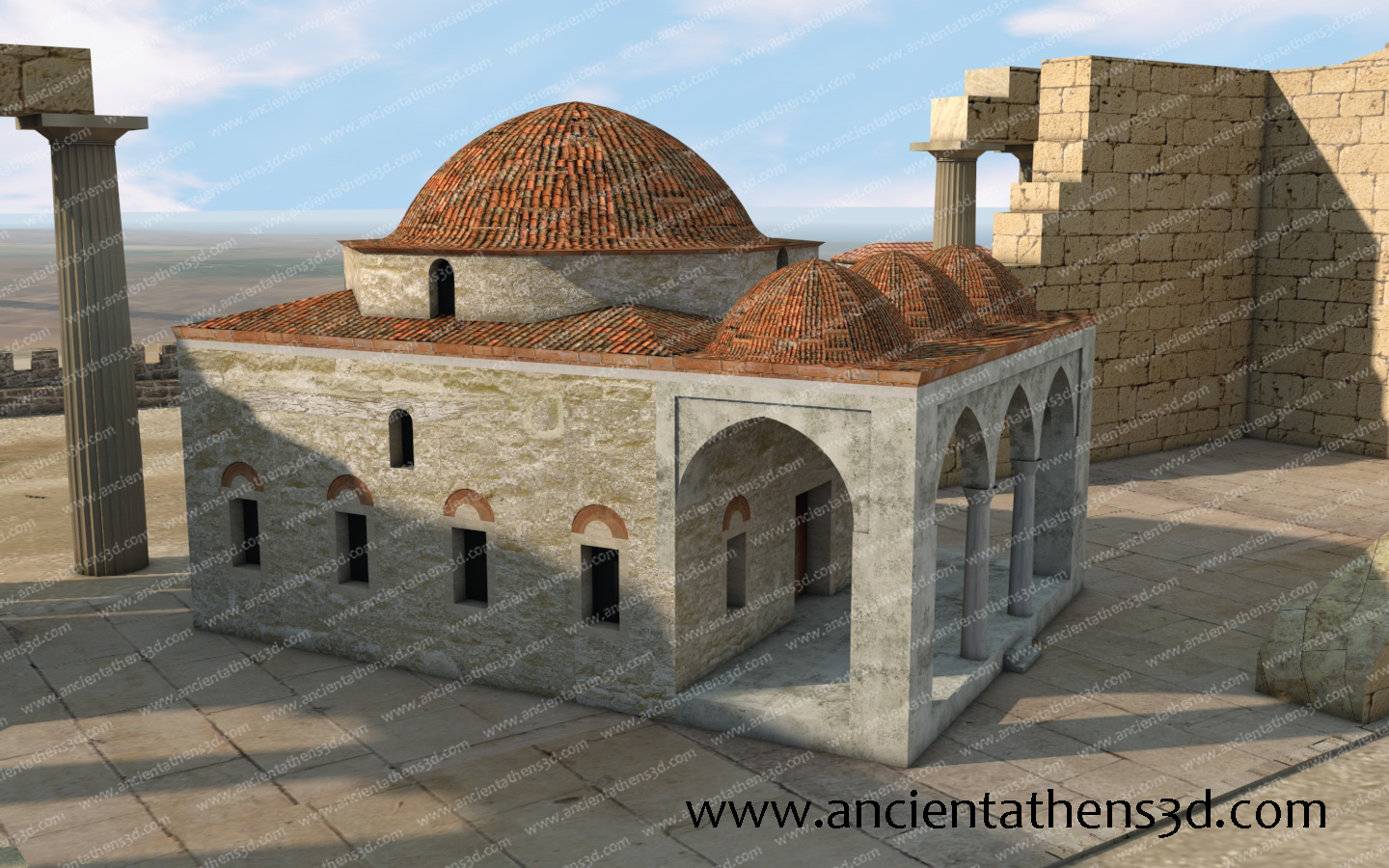
Another view of the mosque. It was demolished in 1844.

